dinsdag 12 juli 2016

What If The Nazis Had Invaded America in 1942

What If The Nazis Had Invaded America? Maps Reveal How Hitler Could Have Attacked The U.S. (As Imagined By 1942 Issue Of Life Magazine)
Option 1: The Nazis go straight for the East Coast with everything they have — submarines, bombers, and warships, delivering an assault up and down the east coast. Simultaneously, the Nazis pin down the Russians on the eastern front, allowing a rendez-vous with Japanese naval forces in the Indian Ocean. That Nazi-Imperial Japanese naval flotilla swoops around the north Pacific, and heads straight towards Los Angeles, attacking along the coast as it moves. Most frightening on this plan is the action of Nazi “Fifth Columnists” attacking from within the United States.


Option 2: is the much-discussed invasion by way of Gibraltar-Dakar-Natal-Trinidad, which President Roosevelt’s Good Neighbour policy has tried to defend against. It is based on combining the Jap, German, Italian and Vichy navies, freed by the capture of Gibraltar and Suez. They must fight the Allied fleets somewhere. Invasion pours up the Mississippi Valley.


Option 3: First Nazis join with Japanese ships in the Canary Islands, then they make an all out push for Norfolk, Virginia, to knock out the primary U.S. Naval base on the Atlantic. This would have opened the waters up for follow-on invasion forces (fifth column plays its traitorous role again).


Option 4: Island hopping. According to these plans, the Nazis would launch an assault on Norfolk, Virginia. First, the Germans would rendezvous with the 'Jap fleet' via the Azores, Madeira and Canaries.


Option 5: The Japanese fake an invasion of Hawaii, while Imperial forces take over the Panama Canal, slicing U.S. naval power in half. Japanese landings in South America are followed by an invasion that works its way up the west coast, once again to Los Angeles.


Option 6: Pearl Harbor revisited. This plan calls for a frontal attack on the West Coast via Pearl Harbor. The Japanese and Germans, supported by carriers, first land on the outer Hawaiian islands, set up air bases and close in on Oahu. More difficult is the big water jump to San Francisco.


vrijdag 3 juni 2016

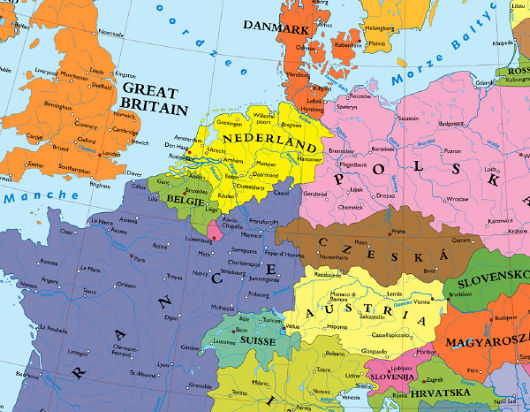
A map of Germany carved amongst her neighbors A map of Germany carved amongst her neighbors

Germany carved amongst her neighbors


Hanover part of the Netherlands, Kassel ruled by France, Nuremberg part of a Bohemia that reaches to the Frankfurt suburbs, Hamburg in Denmark, Regensburg on the Austro-Czech border. This map comes from an article from Die Zeit and shows a map of a Europe without a Germany. Now you thing this is pure ASB, but it is not, there were plans of one sort or another to achieve similar results at the end of the Second World War. The major plan for the dissection of Germany was merely a creation of Nazi propaganda, and while the vaguely similar Morgenthau Plan did exist, it was soon shelved once its impracticality became obvious.

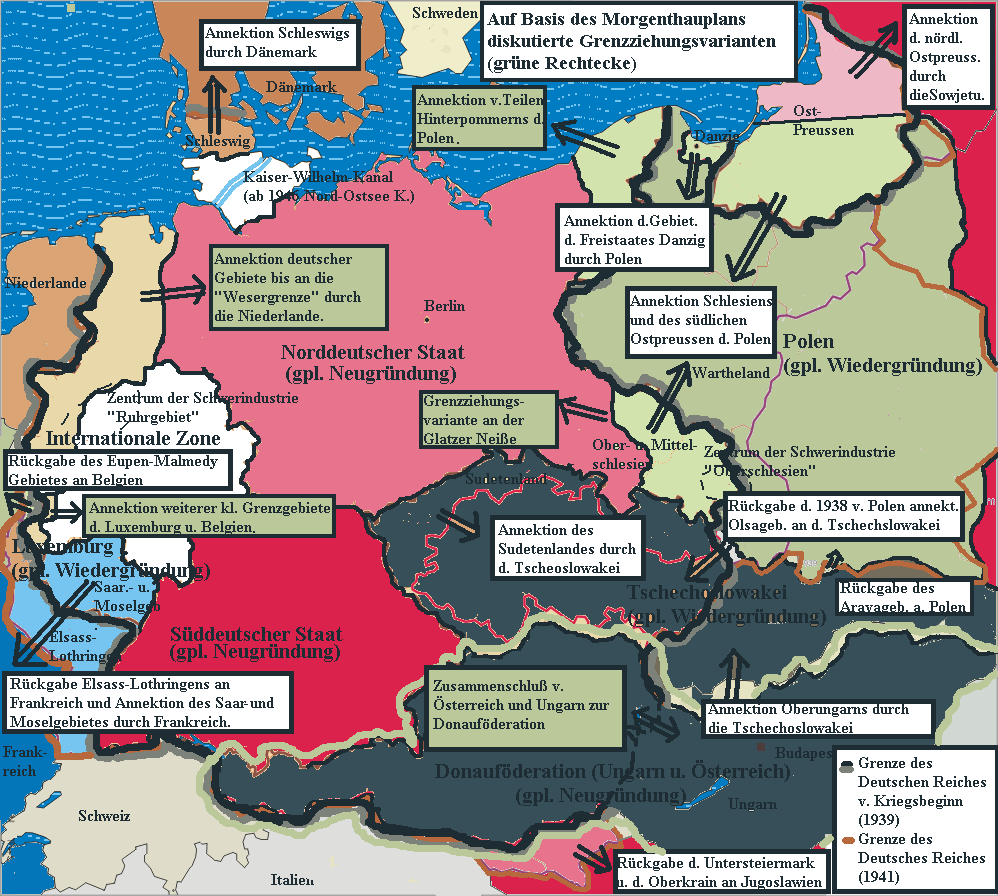
Morgenthau Plan (Large Danube federation)


Another variant of the Morgenthau Plan: a North German State, South German State and large Danube Federation (Austria, Hungary and Czechoslovakia) plus annexation of German border areas by the Netherlands (Dutch annexation of German territory after World War II), Denmark (Schleswig), Poland, USSR, Luxembourg, Belgium and France)

Bakker-Schut Plan

The Bakker-Schut Plan, meanwhile, was a Netherlands proposal for the annexation of several German towns, and perhaps even a number of German cities. German natives would be expelled, except for those who spoke the Low Franconian dialect, who would be forcibly dutchified. They even came up with a list of new Dutch names for German cities.

Map of the Bakker-Schut Plan

The Bakker-Schut Plan. To the left is the Netherlands, to the right is the part of Germany known as Lower Saxony and North Rhine-Westphalia. The coloured areas in the middle are the parts proposed for annexation by the Netherlands.


zaterdag 6 februari 2016

Three days in Augusts 1914

Three days in Augusts 1914
From a book written in the Netherlands called Was het anders gelopen (English: did it happen differently) about what if things turn out differently in Dutch history. One of the chapters is called Three days in Augusts 1914 (Dutch: drie dagen in Augustus 1914).

Augusts 3rd (Day 1)

The chapter begins when German units along the border of Belgium are ordered to begin their attack into Belgium but because a mistake made by the German headquarters the German units station at the border of the Netherlands province of Limburg also receive the orders to move into the province of Limburg in order to attack Belgium.

Later in the day while German cavalry units and Infantry are moving true central-Limburg towards Belgium and small fire fights are happening between German and Dutch army units there the German ambassador to Netherlands who is summed by the Netherlands minster of foreign affairs to explain , tells that the movement of German forces true the province of Limburg towards Belgium was a mistake due a fault by the German HQ but that as the attack was already under way the Germans were planning to continue until all German forces had enter entered Belgium, the German ambassador to Netherlands also informs the Netherlands minster of foreign affairs that Germany is offering to pay any damages caused by the German movement true Limburg but if the Netherlands soldiers continue to engage German units crossing the province of Limburg towards Belgium are attack then Germany will be at war with the Netherlands.

Augusts 4th (Day 2)

Despite the Germans claiming that the movement true the Netherlands province of Limburg towards Belgium was a mistake and panic sweeping the country the Netherlands government still is getting reports of fighting across central-Limburg as German cavalry and Infantry units continue to enter the province of Limburg as they had towards Belgium a German ultimatum is given to the Netherlands government in which the German demand the ending of hostilities against German forces in the province of Limburg ore the German Empire will considers itself in war with the Netherlands.

When a Netherlands General informs the minster of War that a birthday party by some high ranking German officers at a farms just across the border in Germany is to be held for a very high ranking German officer , the minster of War suggest to kidnap that officer to be used as a leverage in negations with the German Empire.

So this Netherlands plan is executed when Netherlands forces in Limburg kidnap the German officer who turns out to be none other than the Crown Prince Friedrich Wilhelm commander of the German 5th Army who is taken in custody and brought to Den Hague, The German government unaware that the crown prince has been kidnaped in the meantime has decided to declare war onto the Netherlands when they are informed about the Crown Prince Friedrich Wilhelm kidnaping and results that the German emperor decides to back down on declaring war onto the Netherlands as he thinks that Germany would made a foul when it becomes known that a handful of Netherlands soldiers mange to kidnap the German crown prince near the German border and he orders the German minster of foreign affairs to contact his Netherlands counterpart for their demands in releasing the Crown prince.

Augusts 5th (Day 3)

After a day the Netherlands demands are made known to the German Government witch are:

- All German forces present in the province of Limburg are to have left the territory by the end 15.00 clock.

- About the kidnaping ore the enragements with Germany will not be made public.

- Germany will respect the neutrality of the Netherlands.

- News bulletins will be considered to be just unconfirmed.

- The crown prince will be handed over to German officials at a border post near the town of Venlo at 16.00 clock.

- Germany will pay for damages caused by the fighting in the province of Limburg.

zondag 3 januari 2016

A stronger Royal Netherlands Navy timeline

A stronger Royal Netherlands Navy timeline (1920-1939)

1920
With the Great War having taught the Netherlands a lesson on the importance of preparing for a war at sea before the start of any future conflict, the Netherlands government, for a moment awash in guilders, decides to increase the funding for the Royal Netherlands Navy by 30 million guilders per year. While some propose offsetting the costs by reducing the size of land forces in the Netherlands East Indies, to ensure loyalty of the ships' sailors and to reduce domestic unemployment the costs are all taken from the Netherlands government and the sailors are raised from the loyal troops who defended the borders during the recent war.

1921
The declining economy results in more than 28,000 veterans' trying to enlist as sailors. While some surplus of sailors to ships is tolerable, the Netherlands government begins to discuss purchase of existing British battle cruisers in lieu of design and construction of new ships, which would take a minimum of three to five years. Purchase of British ships would potentially be cheaper, and it would create a more immediate demand for trained sailors.

A Royal Naval Commission, established the previous year, publishes its 1921 Naval Proposal, the outline of spending and construction for the next decade. The Royal Netherlands Navy commits to buy or build two battlecruisers, four cruisers, and eight destroyers, all to be completed before 1930.

1922
As suggested by the 1921 naval proposal, the Netherlands purchase the former British battlecruiser HMS lion for 100,000 guldens, and renames here HNLMS Amsterdam, becoming the flagship of the Netherlands East Indies Seagoing Squadron.

1923
Creation of the 1st Royal Netherlands Marine Regiment at Naval Base Soerabaja in the Netherlands East Indies.

1925
First Java class cruiser is commissioned, HNLMS Java is the first of four Java class cruiser to be commissioned, while the Royal Netherlands Navy already considers the design old , it has no choice , as newer ship designs are still on the drawing table.

The Royal Netherlands Naval Aviation Service buys 48 Fokker D.XIIIs, who during flight test by pilots of the Royal Netherlands Naval Aviation Service set four new world airspeed records: the airspeed record for carrying a 500 kg payload at a speed of 265.7 km/h, the record for carrying the same payload over a distance of 200 km, at the same time setting and the same records for carrying a 250 kg payload.

1926
Second Java class cruiser is commissioned, and is called HNLMS Sumatra.

1st Royal Netherlands Marine Regiment is upgraded, becoming the 1st Royal Netherlands Marine Brigade. The brigade field’s three infantry battalions and a light tank company fielding six French purchased Renault FT 17 light tanks.

1927
The third Java class cruiser is commissioned, and is called HNLMS Celebes.

1928
The last and fourth Java class cruiser is commissioned, and is called HNLMS Borneo.

A number of high-ranking naval officers within the Royal Netherlands Navy meet true the year of 1928, to discuss possible improvements to the navy, these discussions are about building two light carriers, two new battlecruisers intended to replace the two British bought , four new cruisers, new submarines, four destroyers and other projects which are being worked on.

First batch of four Admiralen-class destroyers are commissioned in 1928, as HNLMS Evertsen, HNLMS Piet Hein, HNLMS Van Ghent and HNLMS Kortenaer enter in service whit the Royal Netherlands Navy.

1929
The Netherlands purchase it second British battlecruiser when the former British Tiger-class battlecruiser HMS Tiger is bought for 250,000 gulden, and who is slated to be handed over to the Royal Netherlands Navy in 1931.

First two Admiralen-class destroyers, belonging to the second batch are commissioned, as HNLMS Van Galen and HNLMS Witte de with enter in service whit the Royal Netherlands Navy.

Work begins on improving the main naval base Soerabaja, the main naval base in the Netherlands East Indies, as work begins on building a new harbor for small craft, building of a new, 2400 ton drydock, building of a pyrotechnic workshops, where shells and sea mines can be fabricated, building of a coastal battery and the dredging of the Westervaarwater to a depth of 9 meters so that the two battlecruisers of the Royal Netherlands Navy can enter the harbor.

1930
The Netherlands government dissolves the Royal Netherlands Army Aviation Group, whit its function to be taken over by the Royal Netherlands Naval Aviation Service who has expanding significant sins 1921. The Royal Netherlands Naval Aviation Service whit the disbanding of the Army Aviation Group consist of six naval air regiments divided between the Netherlands and the Netherlands East Indies.

1931
Last two Admiralen-class destroyers, belonging to the second batch are commissioned, as HNLMS Banckert and HNLMS Van Nes enter in service whit the Royal Netherlands Navy.

Former British Battlecruiser HMS Tiger is officially transferred to the Royal Netherlands Navy, and is renamed HNLMS Rotterdam.

The Netherlands buys 24 Carden LoydMark VI tankettes (to be designated T-2 in the Netherlands, with the T-1 being the French build Renault FT 17 light tank) as well as a license to produce more for both the Royal Netherlands Army and the Royal Netherlands Marines.

Work begins on improving naval base Tjilatjap, Netherlands East Indies.

1932
The Royal Netherlands Navy creates the Netherlands East Indies Fleet, which will consist of the 1st Netherlands East Indies Squadron, whit HNLMS Amsterdam as its flagship, two Java class cruisers and four Admiralen-class destroyers, and the 2nd Netherlands East Indies Squadron which has HNLMS Rotterdam as its flagship, two Java class cruisers and four Admiralen-class destroyers.

Construction of a 40.000-ton drydock, meant for the battlecruisers of the Royal Netherlands Navy begins at naval base Soerabaja; whit work on the smaller 2,400 ton drydock is complete.

Work begins on two Eendracht-class battlecruisers for the Royal Netherlands Navy, who are intended to replace battlecruisers HNLMS Amsterdam and HNLMS Rotterdam.

1933
Construction of the first of two new De Ruyter-class cruisers begins.

Construction of the first two light carriers for the Royal Netherlands Navy begins, the two carriers are based on the British HMS Hermes carrier in service whit the British Royal Navy, and thanks to the relations which have been developed sins the purchases of the first of the two British Battlecruisers in 1921, the Royal Netherlands Navy has whit its British counterparts, made plans for the construction of the two carriers, several visit to here, and support allows the Royal Netherlands Navy to begin construction of these carriers whit out much trouble.

The Royal Netherlands Navy commissions, the first two K XIV class submarines, and whit it fields now more than 24 submarines, reaching from the old K II class to the new K XIV class submarines, whit several new version reaching from coastal submarine, to patrol submarine for both the Netherlands home waters and the Netherlands East Indies being still under construction.

1934
Construction of the second De Ruyter-class cruiser begins.

The Royal Netherlands Marines acquires 2 type A and 2 type B Vickers 6-Ton Tanks for tests, whit the hope of fielding another light tank battalion whit them , the Royal Netherlands Marines already operate a light tank battalion who equipped whit the T-2 light tanks.

Whit construction of two light carriers underway, the Royal Netherlands Navy acquirers the license right for the British Hawker Nimrod carrier based fighter aircraft, which Fokker will build, the Hawker Nimrod, will receive the name of Fokker Nimrod, for use in the Netherlands.

1935
Two new cruisers are ordered by the Netherlands government, these two cruisers of the Tromp-class, will if completed, bring the total number of cruisers serving in the Royal Netherlands Navy to eight.

The reorganization of the Royal Netherlands East Indies Army is completed, and the Royal Netherlands East Indies Army is now a division size army whit, on each of the three major islands one infantry brigade (Java, Sumatra and Borneo) a brigade sized Royal Netherlands East Indies Army Army Aviation, a Calvary Regiment, one Armored Regiment and several battalions ranging from artillery to garrison battalions.

An agreement between the Royal Netherlands Navy and British Royal Navy is made; in which pilots belonging to the Royal Netherlands Naval Aviation Service are to be trained on board British carriers.

The main Netherlands aircraft manufacture, Fokker, begins production of a naval version of the Fokker C.X scout and light bomber, of which more than 16 standard versions are already serving whit the Royal Netherlands Naval Aviation Service, flying from bases in the Netherlands and Netherlands East Indies.

The Netherlands purchased thirty Vickers 6-Ton Tanks and a licensed for local production, after completing field test, conducted by the Royal Netherlands Marines. The local production which will be done by DAF is for both the Type A with two turrets, each mounting a Vickers machine gun and the Type B with a single two-man turret mounting a single machine gun and a short-barreled 47 mm cannon. The T-3 as it is called will be fielded by the 1st Marine Armored Regiments, while the T-1 and T-2 are being handed over to the Royal Netherlands Army and Royal Netherlands East Indies Army Armored Regiment.

1936
The first Eendracht-class battlecruiser, HNLMS Eendracht is commissioned into the Royal Netherlands Navy.

The first flight of the Fokker DN.XXI fighter happens in the Netherlands, two versions are going to be produce, the Fokker DN.XXI, for use on the light carriers being built, and the land base version Fokker D.XXI for use for the defense of the Netherlands.

The Netherlands government increases its stake in Fokker Aircraft Company, becoming the majority shareholder, in an effort to increase the production of both versions of the Fokker D.XXI, and the Fokker Nimrods for use by the Royal Netherlands Naval Aviation Service.

Zeven Provinciën class pre-dreadnought HNLMS Zeven Provinciën, is renamed HNLMS Soerabaia, in order to allow the second De Ruyter class cruiser, to receive the name Zeven Provinciën.

HNLMS Holland and HNLMS Zeeland, the first two Holland class destroyers are commissioned in the Royal Netherlands Navy, and are based on the preceding Admiralen-class destroyers.

At the Swedish Landverk 24 armored cars are ordered, whit rights to produce more locally, which will done by DAF.

De Ruyter-class cruiser, HNLMS De Ruyter is commissioned into the Royal Netherlands Navy.

1937
Second Eendracht-class battlecruiser, HNLMS Kijkduin is commissioned into the Royal Netherlands Navy.

Cruiser HNLMS De Ruyter departs towards the Netherlands East Indies.

Battlecruiser HNLMS Amsterdam is decommissioned as flagship of the 1st Netherlands East Indies Squadron, whit here function being taken over by Eendracht-class battlecruiser, HNLMS Eendracht.

Java class cruiser HNLMS Java is modernized at the Naval Dockyard in Den Helder, Netherlands, the modifications include adding an AA-battery of 4 double Bofors 40 mm-guns, replacing the fire control system with a new Hazemeyer set and shortening the masts, the other three Java class cruisers will also receive the same modifications.

The Netherlands government places an order whit Fokker for fifty Fokker D.XXIs and 14 Fokker DN.XXIs to be delivered before 1941.

Last of the two De Ruyter class cruisers is commissioned, as HNLMS Zeven Provinciën, joins the Royal Netherlands Navy.

Finding the Swedish Landverk armored car engine to weak, DAF, whit corporation of several army and marine officers, comes with an alternative vehicle who appears much more modern than the Landsverk vehicles, called the M37, it keeps the same armament as the Landsverk, and after test have been completed, DAF receives a order for 36 of these vehicles, to be use by the armored car battalion, belonging to the Royal Netherlands Marines Corps.

Third and fourth Holland class destroyers, HNLMS Friesland and HNLMS Groningen are commissioned, bringing the total destroyers service whit the Royal Netherlands Navy to twelve.

The Fokker G.I enters in production at Fokker, the Royal Netherlands Naval Aviation Service who has ordered 36 G.Is wants to use them as heavy fighter and bomber destroyers, and the plan is to equip two squadrons for defense of the Netherlands.

1938
The 3rd Netherlands East Indies Squadron, is formed, and consist of two De Ruyter class cruisers and four Holland class destroyers, becoming the reserve squadron in the Netherlands East Indies Fleet, when not deployed whit the 3rd Netherlands East Indies Squadron, the two De Ruyter class cruisers and four Holland class destroyers are available for the defense of the Netherlands itself.

Battlecruiser HNLMS Rotterdam is decommissioned as flagship of the 2nd Netherlands East Indies Squadron, whit here function being taken over by Eendracht-class battlecruiser, HNLMS Kijkduin.

HNLMS Java is re-commissioned with her new look and is sent to Gibraltar Strait to escort Netherlands ships, as the Spanish Civil war is still reaching on.

The main Netherlands aircraft manufacture, Fokker, halts production of the naval version of the Fokker C.X scout and light bomber, of which only 12 where build, and who are now used mostly to train Royal Netherlands Naval Aviation Service pilot’s onboard British carriers.

First of the two Tromp class cruisers, HNLMS Tromp is commissioned into the Royal Netherlands Navy.

The first of the two named light carriers is commissioned whit the Royal Netherlands Navy, named HNLMS Den Haag, she is the first of two Den Haag-class light carriers to be commissioned and carriers 12 Fokker Nimrods and 8 Fokker DN.XXI.

Java class-cruiser, HNLMS Sumatra enters Den Helder, Netherlands, to receive the same modernization as the lead ship of the class HNLMS Java has received, the two other cruisers; HNLMS Celebes and HNLMS Borneo have already received their modernization at naval base Soerabaja, Netherlands East Indies.

40 Fokker Nimrods now serve in the Royal Netherlands Naval Aviation Service, for use on the Den Haag class light carrier, HNLMS Den Haag, and the soon to be commissioned HNLMS Den Helder, while also being used for defense of the Netherlands.

Java class-cruiser, HNLMS Java leaves for the Netherlands East Indies via Suez, escorting light carrier, HNLMS Den Haag, who is going to join the 1st Netherlands East Indies Squadron.

The 1st Royal Netherlands Marine Brigade is elevated to division status, becoming the 1st Royal Netherlands Marine Division, it consist of 3 infantry regiments, one armored regiment and one armored car battalion, and main function is to protect the Netherlands East Indies together whit the Royal Netherlands East Indies Army.

The last Tromp-class cruiser is laid down at the Nederlandse Scheepsbouw Mij in Amsterdam.

1939
January 9th
Tromp class cruiser, HNLMS Tromp starts her first cruise from Rotterdam, whit here destination being the Mediterranean.

January 11th
The second and last of the two Den Haag light carriers, HNLMS Den Helder , is commission in the royal Netherlands Navy , and like here sister ship , HNLMS Den Haag has 12 Fokker Nimrods and 8 Fokker DN.XXI onboard.

January 13th
Tromp class cruiser, HNLMS Tromp arrives in Lisbon, Portugal.

January 15th
Tromp class cruiser HNLMS Tromp while laying at anchor in Lisbon, Portugal, is rammed by the German passenger ship Orinoco, but is only lightly damaged.

March 11th
The Netherlands, in urgent need of more combat aircraft, place an order for 18 Douglas Model 8A-3Ns light assault/strategic reconnaissance fighters for use by the Royal Netherlands Naval Aviation Service, 1st naval air regiment.

April 30th
Fleet review at Scheveningen, Netherlands , present are the newly commissioned Den Haag class light carrier, HNLMS Den Helder , Tromp class cruiser, HNLMS Tromp , Java class cruiser , HNLMS Sumatra , De Ruyter class cruiser , HNLMS Zeven Provinciën and Eendracht-class battlecruiser, HNLMS Kijkduin.

May 12th
Eendracht-class battlecruiser, HNLMS Kijkduin and Den Haag class light carrier, HNLMS Den Helder starts their voyage towards the Netherlands East Indies.

June 5th
Eendracht-class battlecruiser, HNLMS Kijkduin and Den Haag class light carrier, HNLMS Den Helder arrive in Naval Base Tandjong Priok, Java, whit both HNLMS Den Helder and HNLMS Kijkduin joining the Netherlands East Indies Fleet, 2nd Netherlands East Indies Squadron.

July 3rd
Submarine minelayer for operations in home waters as well as in the colonies, HNLMS 0 19 is commissioned at Wilton-Fijenoord shipyard, Rotterdam, its sister ship HNLMS 0 20 , is expected to be commissioned in Augusts of this year.

August 19th
Tromp class cruiser, HNLMS Tromp starts her long voyage to the Netherlands East Indies, via the Mediterranean and Suez.

August 21st
Minelayer HNLMS Willem van der Zaan is commissioned, she is considered the most modern minelayer in service whit the Royal Netherlands navy.

August 24th
Commissioning of artillery instructions ship HNLMS Van Kinsbergen happens on this day, with her predecessor HNLMS Gelderland being decommissioned, and whit it all Holland-class Pantserdekschepen are decommissioned.

September 1st
The German battleship KMS Schleswig-Holstein opens bombardment on the Westerplatte, a Polish military base outside Danzig, at the same time; regular Wehrmacht troops begin crossing the border into Poland.

September 2nd
Java class cruiser HNLMS Sumatra and De Ruyter class cruiser HNLMS Zeven Provinciën begin performing various duties which included escorting merchants of Netherlands and German origin through the Netherlands territorial waters.

September 3th
Minelayer HNLMS Willem van der Zaan lays 98 mines near Den Helder, Netherlands.

September 4th
The Netherlands Government issues a statement declaring strict neutrality.

September 8th
The Netherlands Government issues instructions to general Reijnders, for the defense off fortress Holland en de Grebbeberg.

September 9th
The first Fokker G-1 heavy fighters begin entering service whit the Royal Netherlands Naval Aviation Service, 1st naval air regiment, 2nd and 4th fighter squadron in the Netherlands.

September 10th
Tromp class cruiser, HNLMS Tromp departs Sabang for Java after refueling.

September 12th
Tromp class cruiser, HNLMS Tromp ,has a rendezvous with the British heavy cruiser HMS Cornwall of Padang, Sumatra , as there are several large German merchants moored in Padang, and according to the British , she inquires what the Netherlands government is planning to do about this ,the government in the NEI replies that they will uphold the proclamation of neutrality, nevertheless, HNLMS Tromp receives the order to search the German ships in Padang for anything suspicious , but boarding party’s conducted the search onboard the German ships , find nothing out of the ordinary.

September 22nd
Minelayer HNLMS Willem van der Zaan lays a new row of 97 mines to the minefield started on September 3th, near Den Helder, Netherlands.

September 29th
Submarines HNLMS O 9, HNLMS O 10 and HNLMS O 11 are attached to the 'coastal division" ,and will be used as the offensive part of the Netherlands coastal defense.

October 2nd
Artillery instructions ship HNLMS Van Kinsbergen departs Den Helder for Netherlands West Indies with submarines HNLMS O-20 and HNLMS O-14 to train new gunners and to join whit the sloop HNLMS Johan Maurits van Nassau, already operating in the Netherlands West Indies.

October 8th
Germany annexes Western Poland.

October 23rd
Tromp class cruiser, HNLMS Tromp officially becomes part of the 2nd Netherlands East Indies Squadron, replacing HNLMS Borneo, who is in Naval Base Soerabaja for an overhaul.

October 27th
The Netherlands ministry of War, confiscates 25 G-1 heavy fighters, meant for Spain, and orders Fokker to arm them as soon as possible.

October 31st
Artillery instructions ship HNLMS Van Kinsbergen arrives at Naval Base "Pareira", Curaçao, and joins sloop HNLMS Johan Maurits van Nassau in patrolling the Netherlands West Indies.

November 1st
As HNLMS Van Kinsbergen leaves Naval Base "Pareira, a British destroyer enters territorial waters, which is strictly forbidden by the neutrality proclamation of September 1939, the British destroyer after being notified of this by HNLMS Van Kinsbergen leafs shortly after.

November 13th
24 DAF M.37 now are in service whit the 1st armored car battalion, 1st Royal Netherlands Marine Division. The older M.36 armored car, are still in service whit the Royal Netherlands Army, 1st Squadron Armored Cars, Light Division, where they are used together whit T-2 light tank (Carden LoydMark VI tankettes) forming the 1st, 2nd 3rd and 4th Squadron Light Tanks.

November 17th
All 18 Douglas 8A-3N, bough in March, are assembled and tested, and deployed whit the Royal Netherlands Naval Aviation Service, 1st naval air regiment.

December 9th
Netherlands East Indies Fleet, 1st Netherlands East Indies Squadron consisting of by Eendracht-class battlecruiser, HNLMS Eendracht, Den Haag class light carrier, HNLMS Den Haag, Java class cruiser HNLMS Java, Tromp class cruiser, HNLMS Tromp, four Admiralen-class destroyers, Zuiderkruis-class submarine mother ship, HNLMS Zuiderkruis and a division of submarines are placed on standby in the Java Sea after a messages of a Japanese concentration of naval forces near Formosa.

December 12th
Flores-class sloop HNLMS Flores leaves the Netherlands East Indies for the Netherlands via Suez.

Read more: http://alternate-timelines.proboards.com/thread/37/stronger-royal-netherlands-navy-timeline#ixzz3wCVUwmui